Introduction
Buying a classic overseas is not inherently dangerous. Thousands of enthusiasts do it successfully. The trouble begins when buying the car is treated as the whole transaction. For a UAE buyer, there are several separate questions hiding inside one purchase: Does the seller genuinely have the right to sell the car? Is the car actually in the condition described? Can it be exported from the country where it is located? Can it be imported into the UAE? And after it arrives, can it actually be inspected and registered for the use you intended?
Those questions are related, but they are not the same. A car can be perfectly exportable from the United States and still create problems in the UAE. A beautiful restoration can conceal serious structural work. A legitimate seller can still be paid through a compromised bank instruction. And a heavily modified restomod can be wonderfully engineered while still requiring additional technical review before registration.
Dishonesty is certainly one risk. But distance creates another: it makes unanswered questions remarkably easy to turn into expensive assumptions.
The Car May Not Be What You Think You Are Buying
The obvious place to start is condition. Classic cars are unusually easy to misjudge remotely. Age, restoration quality and decades of repairs can all disappear beneath attractive paint and carefully chosen photography. Rust can sit behind trim, under carpets or inside structural sections. Filler can disguise poor repairs. Undercoating can hide corrosion. A “restored” car may have received nothing more than paint, upholstery and enough mechanical work to make it run. And mechanical problems are particularly difficult to judge from a listing.
A photograph cannot tell you that the transmission starts slipping after twenty minutes, the steering wanders at speed, the cooling system hates traffic or the differential howls all the way down the highway. That is why a serious remote assessment should involve more than the seller’s chosen photographs.
Useful evidence can include:
- underside and structural photographs
- cold-start and warm-idle video
- engine bay and fluid-leak inspection
- suspension and brake condition
- driving footage where practical
- known rust areas for that specific model
- chassis or vehicle-identification markings
- engine identification where originality affects value
- invoices or restoration photographs where claims are material
For higher-value cars, an independent pre-purchase inspection can be some of the cheapest money you spend on the entire purchase. A good inspection does not eliminate uncertainty, but it can expose the difference between a car that merely photographs well and one that is actually worth buying.
The same principle applies to originality and provenance. “Matching numbers”, “factory specification”, “nut-and-bolt restoration” and “no expense spared” are not inspection results. They are claims.
Even major collector-auction businesses place responsibility on buyers to verify matters such as originality, authenticity, condition and history. Treat the description as the beginning of your diligence, not the end of it.

A classic can look exceptional from six feet away and very different underneath. Remote buying makes an independent inspection especially valuable.
The Seller, the Documents and the Payment All Need to Make Sense
A “clean title” can sound reassuring. It still does not answer every ownership question. What you actually need to know is: Does the document appear genuine? Does the person receiving the money have the right to sell the exact vehicle? Is there a lien or another ownership interest? And does the physical car correspond with the ownership documentation?
US authorities have documented vehicle cloning, fake titles and title-washing schemes. In one NICB example, a buyer lost US$20,000 after purchasing a vehicle carrying a fake title and false identity. That does not mean every old car with unusual paperwork is suspicious.
Older classics can have chassis numbers, serial numbers and documentation systems that predate modern 17-character VIN conventions. US export rules themselves recognize vehicles that may not have a conventional VIN. For a UAE buyer, consistency matters more than obsessing over whether an old car conforms to modern American VIN conventions.
The number or identity on the physical vehicle, the ownership evidence, export documents, customs record and eventual UAE traffic-file information should all be capable of telling the same story.
Useful checks may include:
- seller identity or company details
- current ownership document
- lien release where applicable
- bill of sale or purchase agreement
- physical chassis/serial identification
- prior registrations or history where available
- NMVTIS/state-title history for applicable US vehicles
- NICB theft/salvage screening where relevant
Then there is the moment when perfectly sensible people become surprisingly trusting: payment. The FBI reported US$55.5 billion in exposed losses from Business Email Compromise incidents between October 2013 and December 2023. A cross-border vehicle wire can be vulnerable to the same problem.
If banking instructions suddenly change, verify them independently. Do not rely on the telephone number contained in the same email telling you that the bank account has changed. Where escrow is used, understand exactly what causes the money to be released. Escrow can reduce counterparty risk, but it does not automatically guarantee that a vehicle can be exported, imported or registered in the UAE.
CLASSICS R US INSIGHT: The safest transaction is not the one with the most paperwork. It is the one where the car, seller, ownership evidence, payment instructions and delivery process all tell the same coherent story.
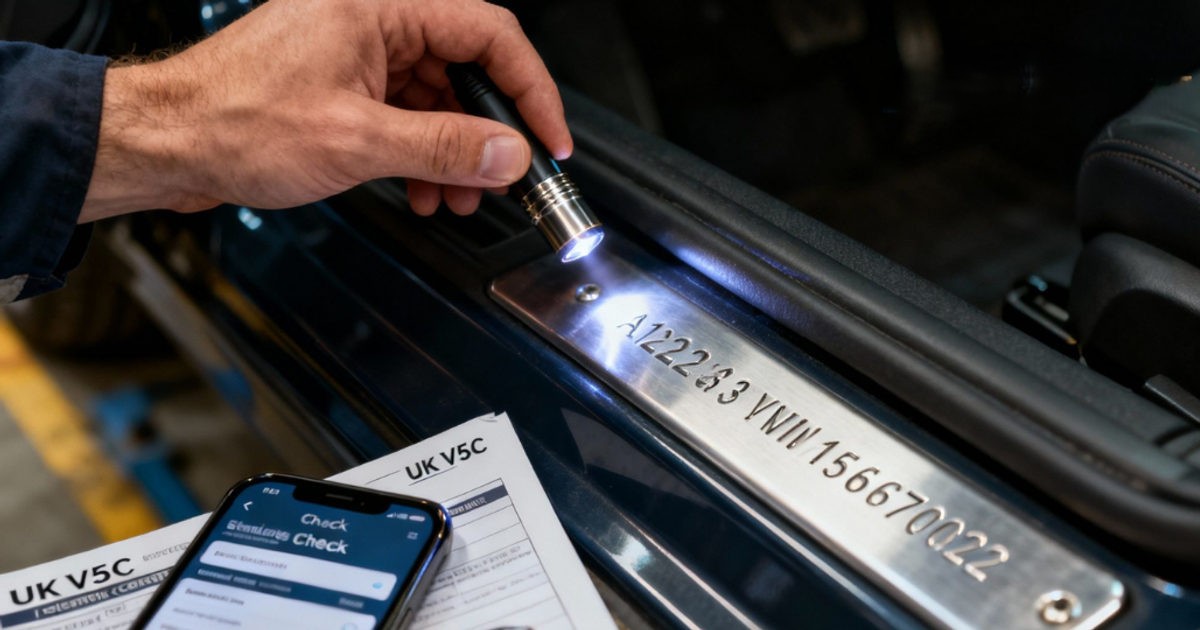
Vehicle identity, ownership evidence and the physical car should all reconcile. A history report is useful, but it is not a substitute for checking the actual vehicle and documents.
Export, Shipping and UAE Import Create Their Own Risks
Once you own the car, you have merely cleared the first gate. For a US-titled used vehicle, CBP requires the applicable ownership documentation and the vehicle to be presented in accordance with the export procedure, generally at least 72 hours before export by vessel or aircraft. Used self-propelled vehicles also require Automated Export System filing 72 hours before export. For a non-US resident, this usually means working through an authorized US freight forwarder or agent.
The practical lesson is simple: the freight forwarder should see the ownership paperwork early. Discovering a title or lien problem when the car is already sitting at the port is an excellent way to miss a sailing and start accumulating costs.
Shipping adds another chain of custody.
Seller → inland carrier → warehouse or export facility → port → vessel → UAE port → clearance → local transporter.
Every transfer creates an opportunity for delay, damage, misunderstanding or, in rare cases, theft or impersonation. A proper pre-shipment condition report should therefore document the vehicle before it enters the logistics chain. For valuable cars, the insurance questions should also be specific:
Questions to ask & why they matter
What value is the car insured for? - Collector cars can be difficult to replace using ordinary used-car values
Does cover include partial damage? - “Total loss only” may not help with body or trim damage
Does cover include theft? - Custody changes several times
When does cover start? - There can be a gap between purchase, inland collection and ocean shipment
Does it include loading/unloading? - Damage often occurs during handling rather than at sea
Does it cover storage and destination handling? - The vehicle can sit between stages
When the car reaches the UAE, money and eligibility become two separate questions. Dubai Customs currently levies customs duty at 5% of the assessed vehicle value. UAE VAT is also 5%, and because customs duty forms part of the import value for VAT, a simplified AED 100,000 customs-value example produces: AED 5,000 customs duty + AED 5,250 VAT = AED 10,250
That is approximately 10.25% before port handling, broker charges, storage, transport, testing and registration. But paying duty does not mean the car is automatically eligible for UAE road use.
MoIAT operates a Product Status Statement service for imported used vehicles and its current material identifies categories such as flooded, scrapped, burnt-out, disassembled and damaged-beyond-repair vehicles among prohibited used-vehicle histories. So do not stop the investigation at the word printed on an American title. What matters here is whether the vehicle’s actual history and status are acceptable under UAE eligibility and registration rules. US export rules can accommodate salvage-title vehicles. UAE road eligibility is a separate question.

The vehicle passes through several hands before it reaches the UAE. Condition records, verified custody and clear insurance terms matter just as much as the ocean-freight quote.
The Biggest UAE-Specific Risk: Importing a Car You Cannot Register as Intended
This is the distinction we would rather a buyer understand before the car gets on the ship: Clearing UAE customs is not the same thing as being able to register the car.
For Dubai, imported and previously owned vehicles require technical inspection before registration. RTA’s current classical-vehicle pathway applies to vehicles over 30 years old, but “classical” does not mean exempt from roadworthiness. RTA’s published requirements include structural condition, suitable tyres, working brakes and lighting, functioning internal components and an engine operating properly without relevant fuel, lubricant or coolant leaks.
That matters particularly with barn finds and projects. A tired but fundamentally good classic may be an excellent restoration purchase while still being nowhere near ready to pass inspection when it lands.
Modified classics deserve even more attention. And this is where a lot of casual advice becomes misleading: Modified does not mean unregistrable. Plenty depends on what was changed and how substantial the changes are. The more fundamental the modification, however, the more registration uncertainty you are buying along with the car.
Federal traffic law requires approval for substantial changes involving areas such as vehicle shape, chassis, body and engine power. Dubai RTA’s current guidance says vehicles with modified bodies, and imported vehicles with substantial engine or body modifications, can be referred to the Technical Inspection Committee. That means buyers should investigate heavily modified cars before committing, especially where the build involves:
- major engine swaps or large power increases
- donor-chassis conversions
- frame shortening, lengthening or clipping
- altered suspension pickup points
- substantial structural wide-body work
- roof chops or major body conversions
- replacement or heavily modified chassis sections
- unclear rebodying or vehicle-identity continuity
Suspension modifications are more nuanced. Bolt-on dampers or springs are not the same thing as a chassis whose structural mounting points have been moved or fabricated.
The real question is not: “Is the car modified?” It is: “How substantial are the modifications, how well are they documented, and what will the UAE inspection authority make of them?” A beautifully engineered overseas restomod may ultimately pass inspection. A badly documented one can turn an exciting purchase into months of remedial work, technical review and expense.
For a modified classic, ask for a build dossier wherever possible: builder details, invoices, engine specification, photographs of chassis and structural work, suspension installation, brake and cooling upgrades and before/during/after build photographs. The more radical the build, the less comfort you should take from the sentence: “Don’t worry. It’s all professionally done.” Professional work should be easier to document, not harder.
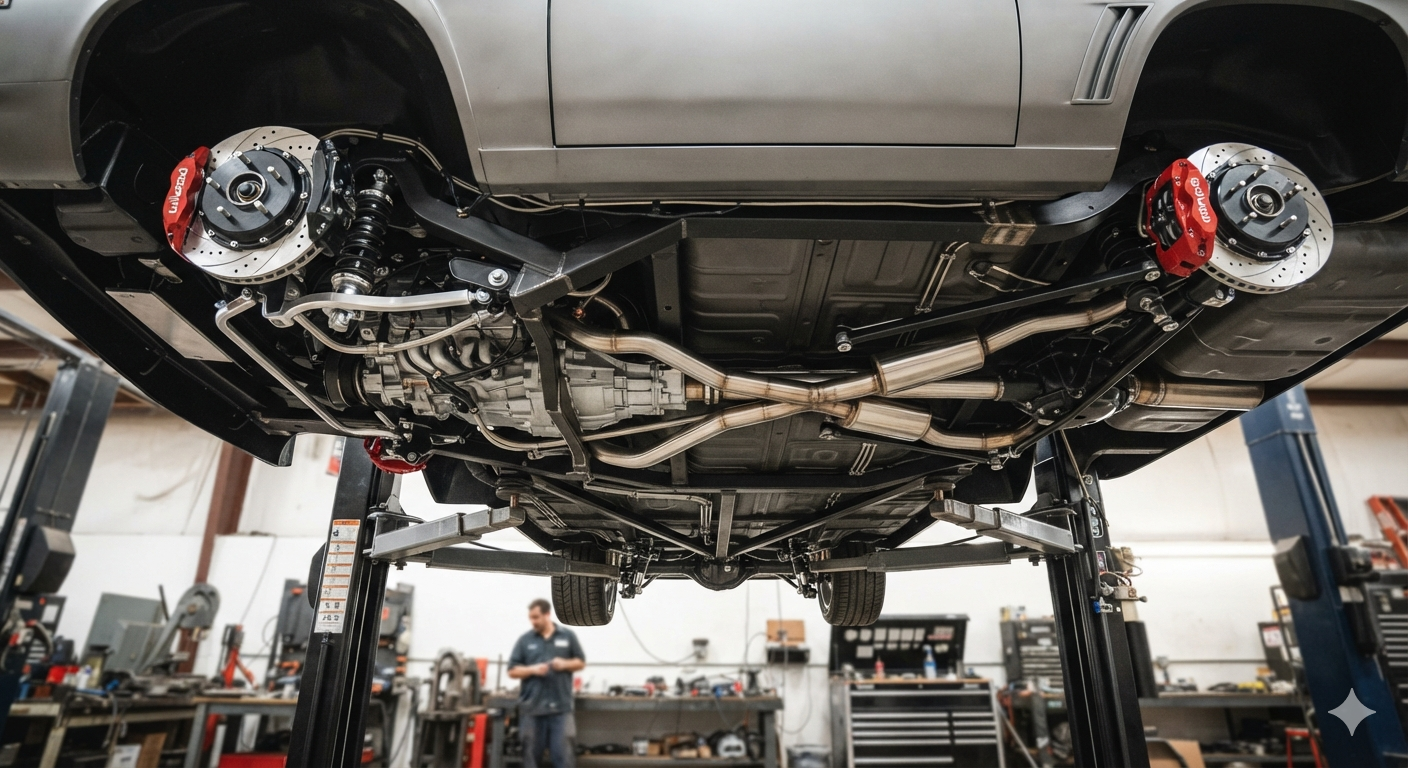
Modified does not mean unregistrable. But major engine, chassis, body and structural changes deserve additional UAE registration diligence before purchase.
Before You Send Money: The Risk Check
Before an overseas classic-car purchase becomes irreversible, you should be able to answer:
1. Who legally owns the car and has the right to sell it?
2. Does the physical car correspond with the ownership documentation?
3. Is there any lien, theft, flood, scrap, non-repairable or other history that needs to be resolved?
4. What do I actually know about the car’s structural and mechanical condition?
5. Has an independent inspector seen the car where appropriate?
6. Are all material originality, restoration and modification claims supported?
7. Has the US export agent reviewed the ownership documents?
8. Are the payment instructions independently verified?
9. Do I know exactly what the shipping insurance covers and when it begins?
10. Have I considered UAE eligibility and registration risk before paying?
11. If the car is modified, do I understand the engine, chassis, body and suspension changes?
12. If one of these answers is unclear, why am I sending money today?
Conclusion
Most overseas classic-car purchases do not end in fraud, disaster or an unregistrable car. The problem is that distance makes uncertainty easier to ignore — right up until the uncertainty arrives at Jebel Ali with your name on the paperwork. A seller may be completely genuine and still misunderstand the car. A restoration may be beautiful and still have poor structural work. A US title may be perfectly adequate for export and still carry history that needs to be examined from a UAE perspective. A restomod may be superbly engineered and still deserve careful registration diligence before it crosses an ocean.
You will never eliminate every risk from buying an old car thousands of kilometers away, and trying to do so would remove half the fun from owning classics. The sensible objective is simpler: identify the risks that can seriously hurt you while you still have the leverage to ask questions, demand evidence, renegotiate or walk away. Once the money has moved and the car is on the water, your options become considerably more expensive.
CLASSICS R US INSIGHT: The most expensive problems usually begin as unanswered questions that someone decided were probably fine. If an important part of the transaction does not make sense before you pay, investigate it while you still have the choice to walk away.
If you are considering a classic overseas and want another set of eyes on the opportunity, contact Classics R Us by phone or WhatsApp. Send us the listing and the information you have. We will tell you what appears clear, what remains uncertain and what we think should be checked before you proceed.
IMPORTANT INFORMATION: Information in this Guide reflects requirements and published guidance available in August 2026. Import, customs, tax, shipping and registration requirements can change and can vary according to the vehicle, modification level and emirate of registration. Dubai RTA requirements are referenced where Dubai-specific procedures are discussed; buyers registering elsewhere in the UAE should confirm the current requirements of the relevant licensing authority.