Introduction
A surprising number of good classic cars are bought without the buyer ever standing beside them before purchase. That does not make the process reckless. What makes it reckless is relying on a handful of flattering photographs, a seller saying “runs great”, and hope.
A disciplined remote assessment can tell you a great deal about a classic car: whether it is complete, whether the specification makes sense, whether obvious corrosion is present, whether the visible restoration quality looks credible, whether modifications are apparent and whether the documents, physical identifiers and seller’s story agree.
But photographs and videos have limits. They cannot reliably tell you what is happening inside a chassis rail, how strong an old repair really is, how much play exists in the suspension, or what the car feels like under braking and load.
The objective is therefore not to achieve certainty from 8,000 miles away. It is to eliminate unsuitable cars cheaply, identify the important unknowns, and then put a competent independent person beside the car before your money is committed.
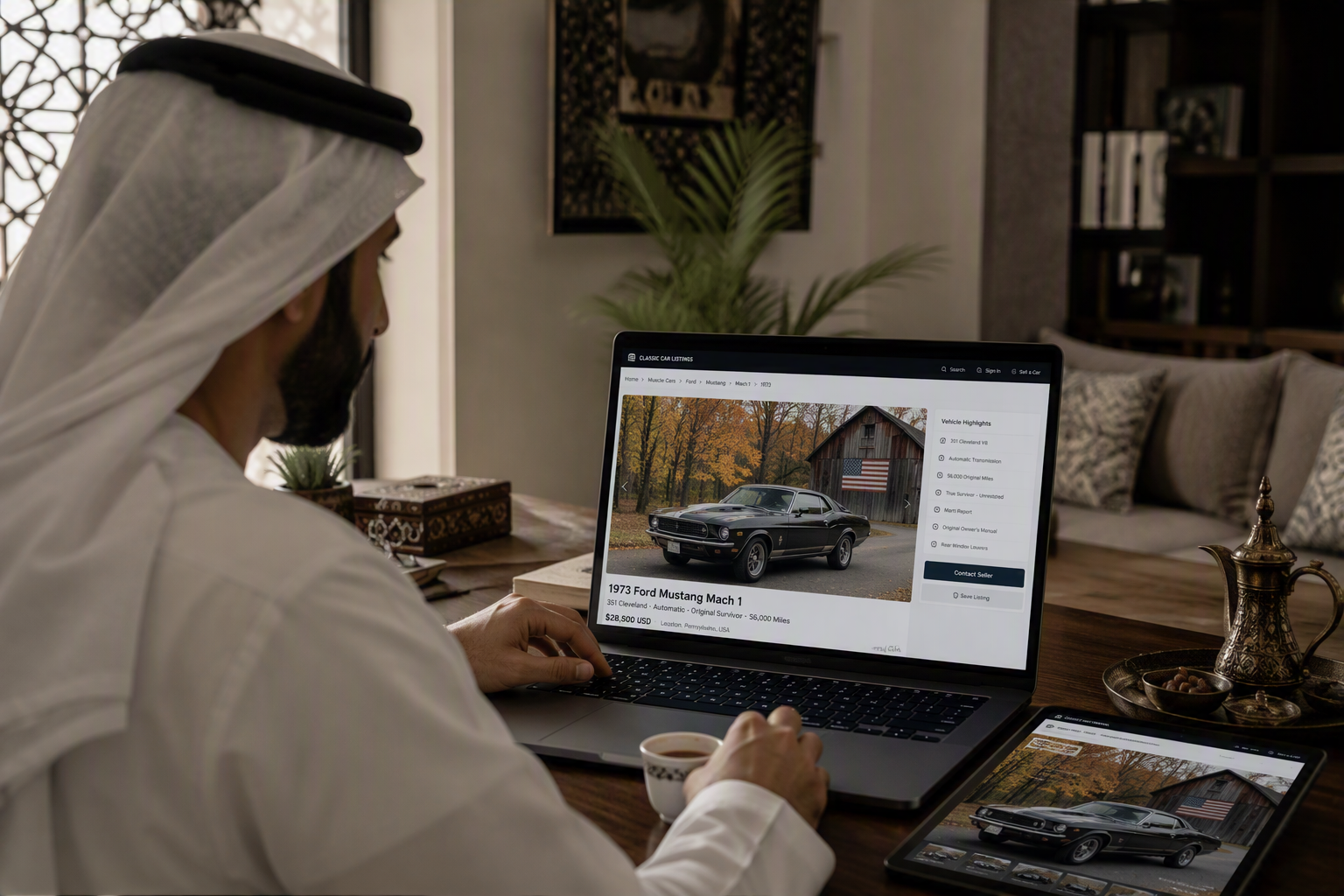
You do not need to stand beside every car yourself. But before the purchase becomes serious, somebody competent should.
1. Start with evidence, not enthusiasm
The remote assessment should become progressively more demanding as the car becomes more interesting. A useful sequence is:
1. Review the advertisement carefully.
2. Ask structured questions about history, condition, rust, mechanical work, originality and missing parts.
3. Compare the paperwork with the physical identity of the car.
4. Request a proper photo dossier.
5. Ask for recorded video.
6. Use a live video call to resolve unanswered visual questions.
7. Commission an independent pre-purchase inspection.
8. Decide what uncertainty still remains — and whether the price justifies it.
The important point is that each stage should answer a different question. Photographs should tell you whether the car deserves more attention. Video should tell you whether obvious systems and behaviour justify moving forward. The independent inspection should tell you whether the car deserves your money.
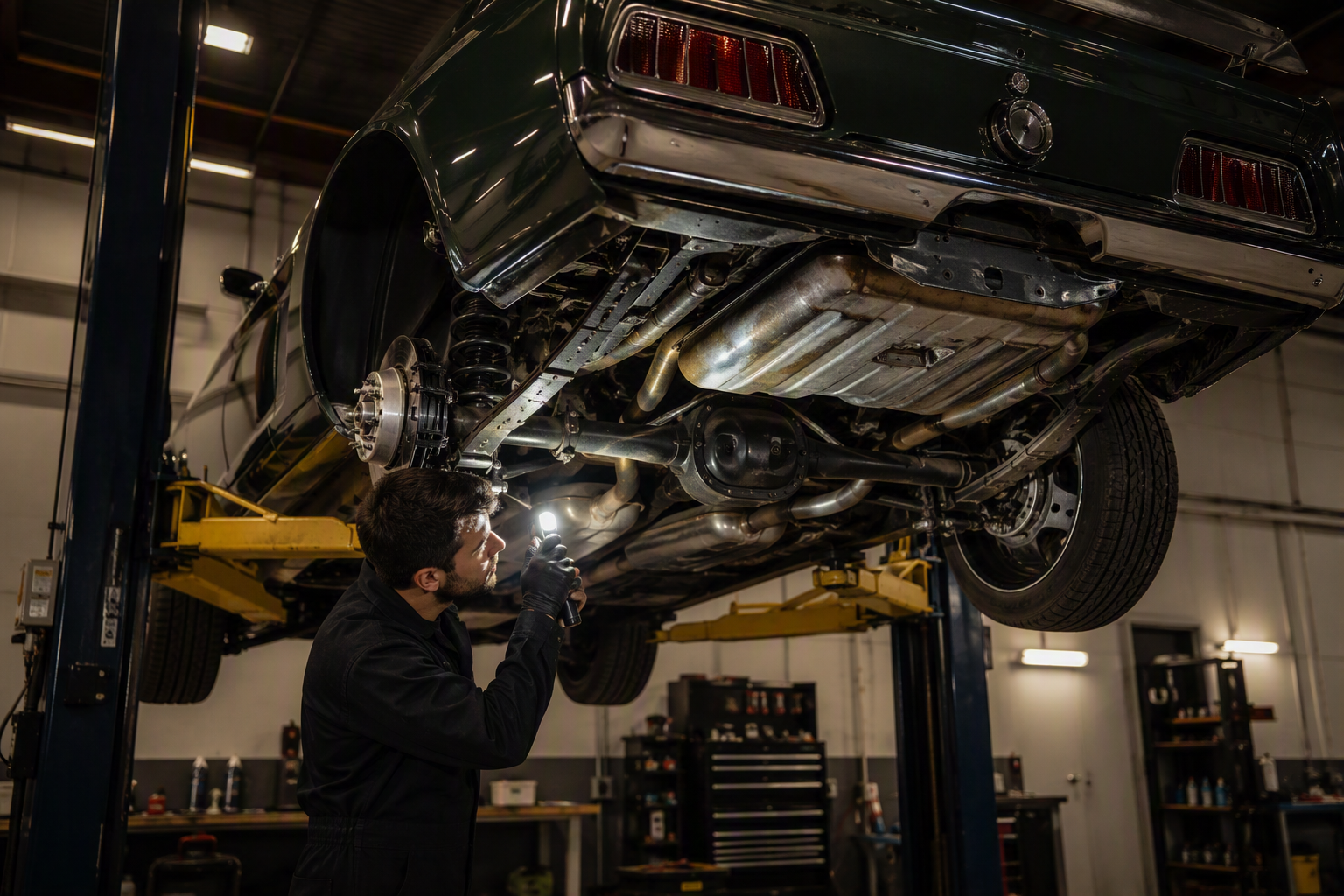
Remote evidence is a filter. A competent physical inspection is what turns the important unknowns into findings.
CLASSICS R US INSIGHT: The more the purchase price depends on claims such as “rust-free”, “fully restored”, “matching numbers”, “original paint” or “fresh engine rebuild”, the less you should rely on seller-supplied photographs alone.
2. Do not ask for “more photos” — ask for the right photos
A seller can send you 100 beautiful photographs and still tell you very little. What matters is whether the photographs become diagnostic. At minimum, ask for:
Area - What you are trying to learn |
Straight front, rear, both sides and all four three-quarter views - Symmetry, stance, panel fit, colour consistency and missing trim
Every panel gap - Poor fit, previous repairs, replacement panels or possible structural distortion
Lower doors, sills/rockers, wheel arches and lower wings/fenders - Common corrosion zones
Door shuts, hinge pillars and weatherstrip channels - Hidden seams, overspray and repair quality
Engine bay, firewall, inner wings and battery tray - Corrosion, leaks, accident repair, wiring quality and specification
Windscreen and rear-window surrounds - Water ingress and hidden corrosion
Boot floor, spare-wheel well and quarter cavities - Trapped water and hidden rust
Floors beneath removable carpets - Water damage and structural corrosion
Full underside on a lift - Frame rails, floor pans, crossmembers, suspension mounts, leaks and old repairs
All visible welds and patches - Repair quality and where structural work has been carried out
Dashboard, seats, headliner, carpets, trim and switchgear - Wear, completeness and water damage
Chassis/serial number, body tag and engine number where relevant - Whether the physical car matches the paperwork and seller’s story
The biggest remote-assessment mistake is allowing the seller to decide what you see. If a car is advertised as “rust-free”, ask specifically for the underside, sills, floor pans, suspension mounting points, battery area and known model-specific rust zones. If a restoration is claimed, ask for photographs from during the restoration, not just the finished glossy car. If the underside has recently been coated black, ask for the invoice, preparation details and photographs taken before the coating was applied. Fresh underseal is not proof of concealment. But once thick coating covers old metal, the photographic evidence underneath it is gone.
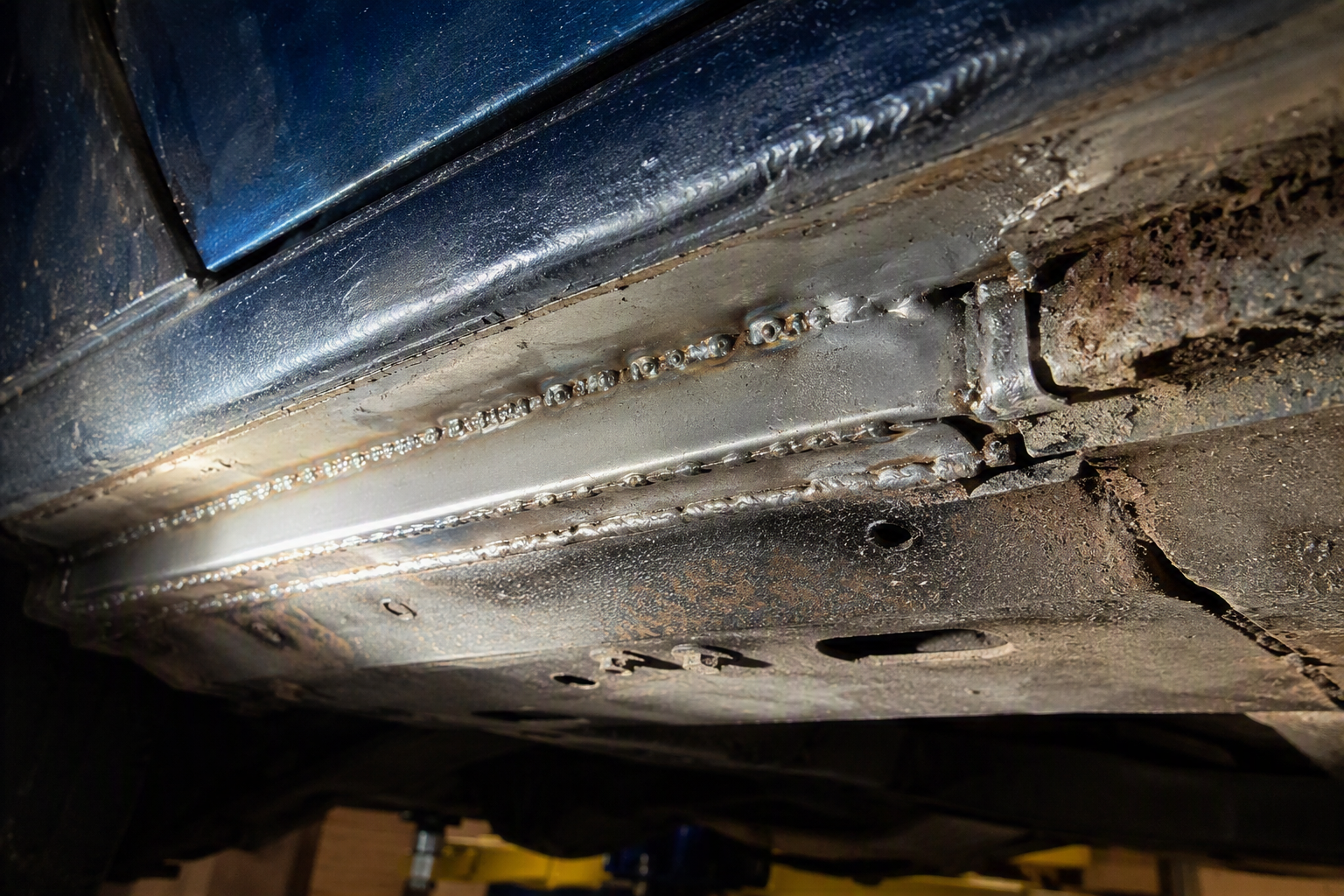
The visible paint can be beautiful while the expensive problems are underneath it.
3. Rust deserves disproportionate attention
A remote buyer should distinguish between:
Surface corrosion — light oxidation on otherwise sound metal.
Cosmetic corrosion — rust affecting visible outer panels without obvious structural loss.
Structural corrosion — weakened or perforated metal in frame rails, crossmembers, sills, pillars, floor reinforcements, subframes or suspension mounting areas.
That distinction matters because rust can rapidly become more expensive than a tired engine or gearbox. On a body-on-frame car, concentrate heavily on the main rails, crossmembers, outriggers, body mounts, spring hangers and suspension mounting points. On a monocoque or unibody car, focus more on sills/rockers, inner sills, floors, pillars, bulkheads, strut/shock towers, subframe interfaces and suspension pickup points.
And always learn the rust map of the exact model you are considering. A generic checklist is useful; model-specific knowledge is better.
4. Video should demonstrate behavior, not just sound good
A useful video is not fifteen seconds of somebody revving the engine. Ask for a sequence that shows the car behaving from cold through normal operation.
Ideally, request:
- a genuine first cold start after the car has sat;
- dashboard and warning lights before startup;
- cranking behaviour;
- oil-pressure indication where fitted;
- smoke immediately after startup;
- idle quality and engine noises;
- warm-up to normal operating temperature;
- temperature and oil pressure once fully warm;
- engine bay while running;
- visible fluid leaks;
- cooling-fan operation where relevant;
- lights, indicators, horn and wipers;
- windows, seats and roof operation where fitted;
- air conditioning;
- transmission selection or clutch take-up;
- normal acceleration;
- gear changes;
- straight-line tracking;
- progressive braking;
- steering movement and low-speed turns;
- suspension, differential and drivetrain noises.
A video can show you that something happened. It is much weaker at explaining why it happened. Blue smoke, slow oil-pressure rise, a gearbox crunch or a steering knock can all be visible or audible remotely. Diagnosing whether the cause is minor or expensive usually requires physical inspection and testing. A live WhatsApp or FaceTime walkaround is even more useful because you control the next question:
“Go back to the left rear sill.”
“Lift the boot mat.”
“Show me the chassis number in context.”
“Put the camera behind that wheel.”
“Show me the temperature gauge after fifteen minutes.”
A seller who cannot accommodate one particular request may have a perfectly reasonable explanation. A seller who repeatedly refuses fresh photographs, live video and an independent inspection is a very different proposition.
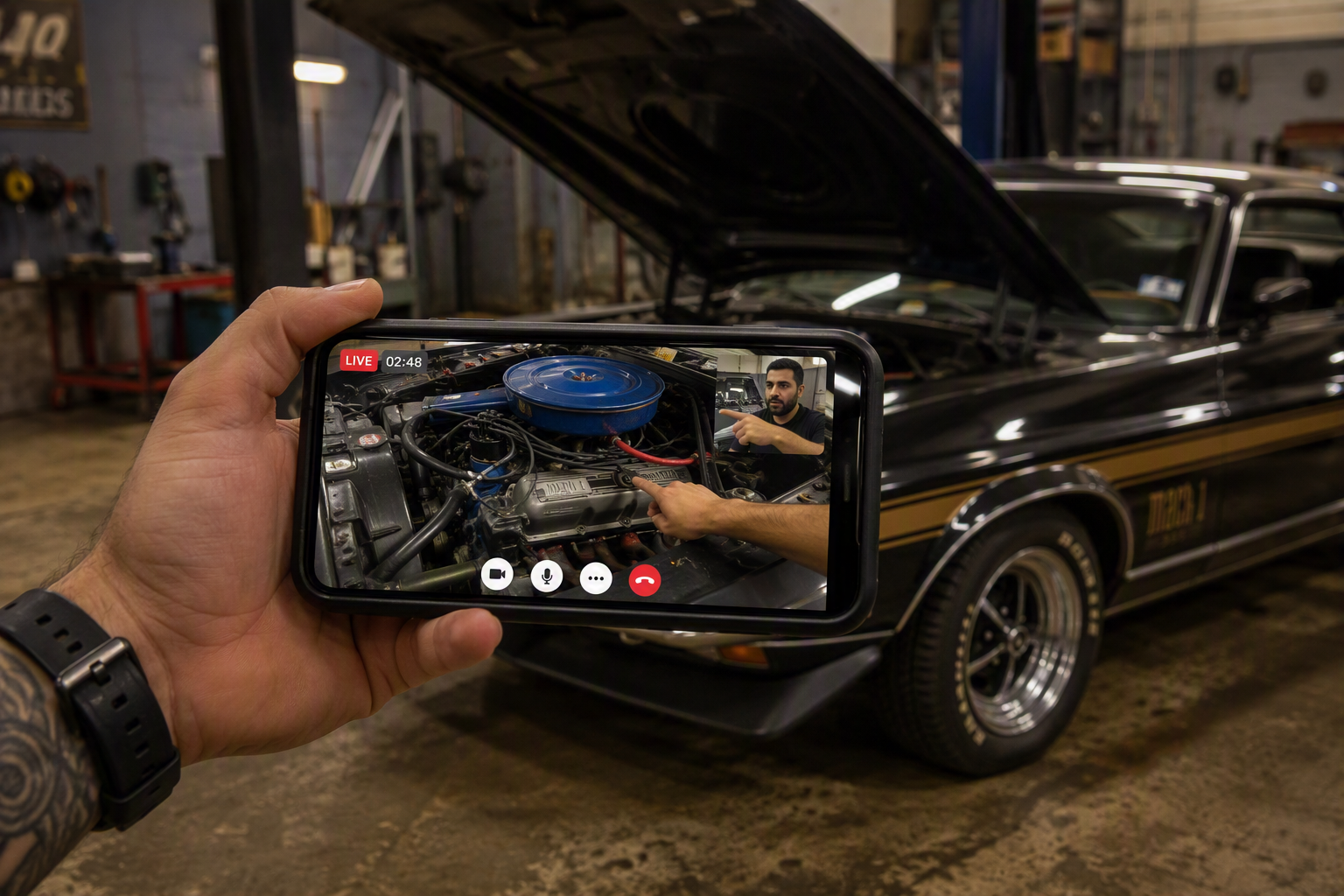
Live video reduces the seller’s ability to show only the parts of the car they have chosen in advance.
5. Know where remote assessment stops
Some things can be judged surprisingly well from thousands of kilometres away. Others cannot.
Confidence level - What you can usually assess |
Reasonably well remotely - General cosmetic condition, completeness, visible originality, obvious rust, specification, visible modifications, document consistency
Partly remotely - Paint quality, restoration quality, structural corrosion, mechanical condition, wiring quality, road behaviour
Needs physical inspection - Hidden rust, weak repairs in inaccessible areas, suspension or wheel-bearing play, brake wear, chassis integrity, subtle drivetrain faults, internal engine condition
For expensive engines or suspicious mechanical symptoms, the next level may include compression and leak-down testing. For originality-sensitive cars, use a marque specialist who understands engine numbers, casting dates, body tags, factory equipment and model-specific details. For a heavily modified car, the question changes from “is it original?” to “was it engineered properly?” And for a project car, completeness can matter as much as condition.
A missing engine may be obvious. A missing grille surround, quarter-window mechanism, model-specific dashboard trim, rare moulding or unobtainable gauge can be much harder and more expensive to replace. Before buying a dismantled project, ask the seller to lay out and photograph the parts by system, rather than accepting photographs of anonymous boxes.
CLASSICS R US INSIGHT: Before booking an inspector, send them your own unresolved-question list. Do not merely ask for “a PPI”. Tell them exactly what the seller has claimed and what you need physically verified.
6. When do you need an independent PPI?
For most serious road-going classics, the answer is: before the transaction becomes difficult to reverse. A good classic-car PPI should ideally include:
- inspection on a lift;
- rust and structural assessment;
- body and paint review;
- identification-number checks;
- drivetrain inspection;
- fluid leaks;
- brakes, steering and suspension;
- electrical systems;
- full warm-up;
- road test where legal and safe;
- photographs;
- written findings;
- direct conversation with the buyer.
Where justified, add:
- paint-depth measurements;
- compression test;
- leak-down test;
- cooling-system evaluation;
- borescope inspection;
- marque-specific authenticity checks.
Current commercial examples researched in August 2026 ranged from roughly US$330 for a mobile classic-car inspection to US$500–1,500 or more for specialist marque inspections, depending on scope and testing. That is very little compared with the cost of discovering serious corrosion, a weak engine or badly executed structural repairs after the car has crossed an ocean.
But a PPI is not a warranty. Hidden corrosion can remain inaccessible. Intermittent faults may not occur during the appointment. Compression and leak-down tests do not inspect every internal engine component. A car can pass an inspection today and still fail later. A PPI should reduce uncertainty, not create false certainty.
A practical remote-buying checklist
Before sending meaningful money, ask yourself:
- Do the documents and physical identifiers describe the same car?
- Have I seen current photographs of the underside and known rust zones?
- Have claimed repairs/restoration been supported with invoices or progress photos?
- Have I seen the car start from genuinely cold and reach full operating temperature?
- Have I seen the major electrical and mechanical systems operate?
- Do I know what is original, what has been modified and what is missing?
- If it is a project, have the scarce parts been individually accounted for?
- Have all important unanswered questions been written down for the inspector?
- Has an independent competent person physically inspected the car?
- What important uncertainty still remains after that inspection?
If the final answer is “I still do not know what the structural rust looks like” or “nobody independent has driven it”, that uncertainty should not disappear simply because the seller is pleasant or the photographs are beautiful.
Conclusion
Buying a classic car remotely is not the same thing as buying blindly. You can learn a great deal from thousands of kilometres away if you ask for the right evidence in the right order. The goal is not to replace an inspection with photographs.
It is to use photographs, documents, video and live interaction to decide which cars are worth inspecting, then use the right independent specialist to resolve the questions that cannot be answered remotely.
A hundred excellent photographs are valuable. A lift, trained eyes, instruments and a road test answer different questions. The strongest sight-unseen purchase uses both.
CLASSICS R US INSIGHT: You do not necessarily need to fly across the world to inspect every classic yourself. But once the purchase becomes serious, somebody competent should stand beside the car on your behalf.
If you are considering a classic overseas and want help understanding what evidence to request before committing, contact Classics R Us by phone or WhatsApp.
IMPORTANT INFORMATION: This Guide is intended as practical buyer education, not a guarantee of vehicle condition. Photographs, videos, seller statements, inspection reports and diagnostic tests all have limitations. Classic cars can contain hidden corrosion, undocumented repairs, intermittent faults and age-related defects that are not apparent during a remote assessment or even a professional inspection.
Inspection scope varies materially between providers. Buyers should agree the required scope in writing and use a marque or restoration specialist where the vehicle’s value depends heavily on originality, structural condition or specialist mechanical knowledge.
Commercial inspection prices quoted in this Guide are representative examples researched in August 2026, not fixed market tariffs or endorsements of particular providers.